Auto Component Production Tracking Software for Indian Plants

A shift supervisor writes rejection counts on a sheet. By the time the weekly review arrives, the same defect has run for three shifts on the same die. For auto component makers in Pithampur, Pune or Chennai, this is what happens when production plans change by the hour, rejections are noted on paper, and nobody sees the pattern until a customer complains. Brandsmashers Tech, based in Bhopal, builds fast, AI-assisted custom software for gaps like this. Here is how we would approach it for an auto component maker.
01.Who this is for
This is for auto component makers in India that supply larger OEMs on tight schedules, with several lines, shifts and supervisors. You have outgrown paper when rejection counts sit on a sheet until the weekly review, when the plan changes by the hour and the floor works from an old version, and when the plant head has to walk the lines to know what was produced. Dispatch that slips against the customer's schedule, and defects noticed only after a complaint, are clear signs the registers are no longer enough.
02.Why rejections hide on paper
Most auto component makers do not lack effort. They lack one place where the facts live. So people fill the gap with calls, messages and memory, which works until volume grows or a key person is away. Off-the-shelf tools rarely fit because your process has its own steps and exceptions, and forcing it into a template brings the spreadsheets back.
03.What we build for the shop floor
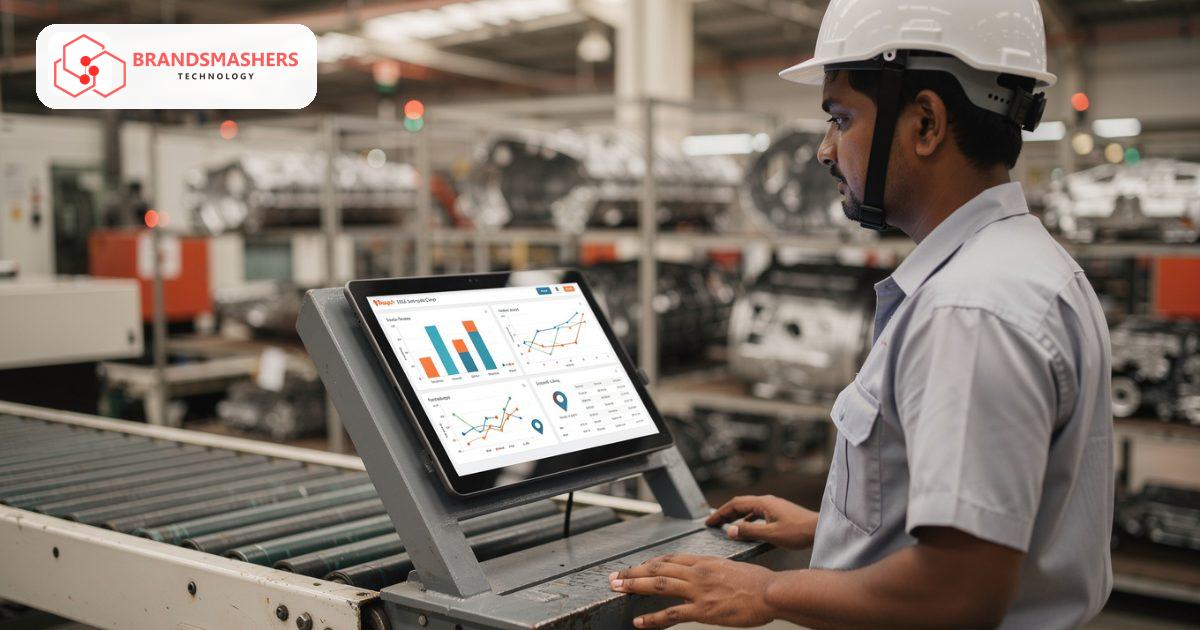
We start with the workflow that hurts most. For this business that usually means a production plan versus actual view by line and shift, a quality and rejection log with defect codes and reasons, a dispatch tracker tied to customer schedules, and simple dashboards for the plant head, readable on a phone. AI-assisted development lets you see a working version early and refine it with your team. Where you already run accounts software, we connect to it rather than replace it.
04.Where AI helps, and where it stops
The AI layer is modest and useful: defect-trend alerts that flag a rising rejection pattern on a part, machine or shift so the quality team can look early. The alert points to the data; your quality engineers decide the cause and the action. If your data is thin at the start, we begin with clean capture and add intelligence as records grow.
05.Built for India, not adapted to it
Indian component makers supply to larger OEMs with tight schedules, so dispatch tracking mirrors the customer’s schedule and GST invoice flow. Supervisors enter data on a phone or tablet in simple screens, with Hindi labels if that helps. Madhya Pradesh clusters such as Pithampur and Mandideep are exactly the kind of plants we build for, priced in rupees and scoped to the lines you actually run.
06.How a first version comes together
For an auto component plant, the first version usually starts with one line and the rejection sheet its supervisor already fills in.
- 01We walk the shop floor with a shift supervisor and the quality team to see how plan, actual output and rejections are recorded today.
- 02We agree a first version covering plan versus actual by line and shift, with a rejection log using your own defect codes.
- 03Supervisors test the phone or tablet screens during real shifts, with Hindi labels if that helps, and we simplify anything that slows them down.
- 04After one line is running well, we extend to the other lines and add the dispatch tracker tied to customer schedules and GST invoices.
- 05Defect-trend alerts are switched on once enough rejection history exists, and your quality engineers decide what each alert means.
07.Questions buyers ask
- What does auto component production tracking software in India record on each shift?
- It records the plan against actual output by line and shift, along with rejections against defect codes and reasons. Supervisors enter this on a phone or tablet during the shift instead of on paper. The plant head sees the same figures on a simple dashboard, readable on a phone, without waiting for the weekly review.
- Can supervisors use it if they are more comfortable in Hindi?
- Yes. Screens can carry Hindi labels, and entry is kept to a few simple fields so it fits into a busy shift. We test the screens with your own supervisors before rollout and change anything that confuses them. If entry is awkward the data dries up, so ease of entry gets as much attention as the reports.
- Does the dispatch tracker follow our OEM customers' schedules?
- That is how it is designed. Dispatch tracking mirrors each customer's schedule, so the team can see what is due, what is packed and what has left. It links to the GST invoice flow, and where you already run accounts software, we connect to it rather than replacing it. The aim is fewer surprises on the morning a schedule falls due.
- Do the defect-trend alerts decide what is wrong with a part?
- No. The alerts flag a rising rejection pattern on a part, machine or shift so the quality team can look early. They point to the data, and your quality engineers decide the cause and the action. We switch them on once the rejection log has built up enough history to be meaningful, so early alerts are not based on guesswork.
Next step: Tell us the one process that costs auto component makers the most time today, and we will sketch what a first version could look like for your team in Pithampur. Contact Brandsmashers Tech
NEXT STEP
Need help with this?
KEEP READING