
Exchange House Software for the UAE: Rate Boards, KYC and Transaction Logs
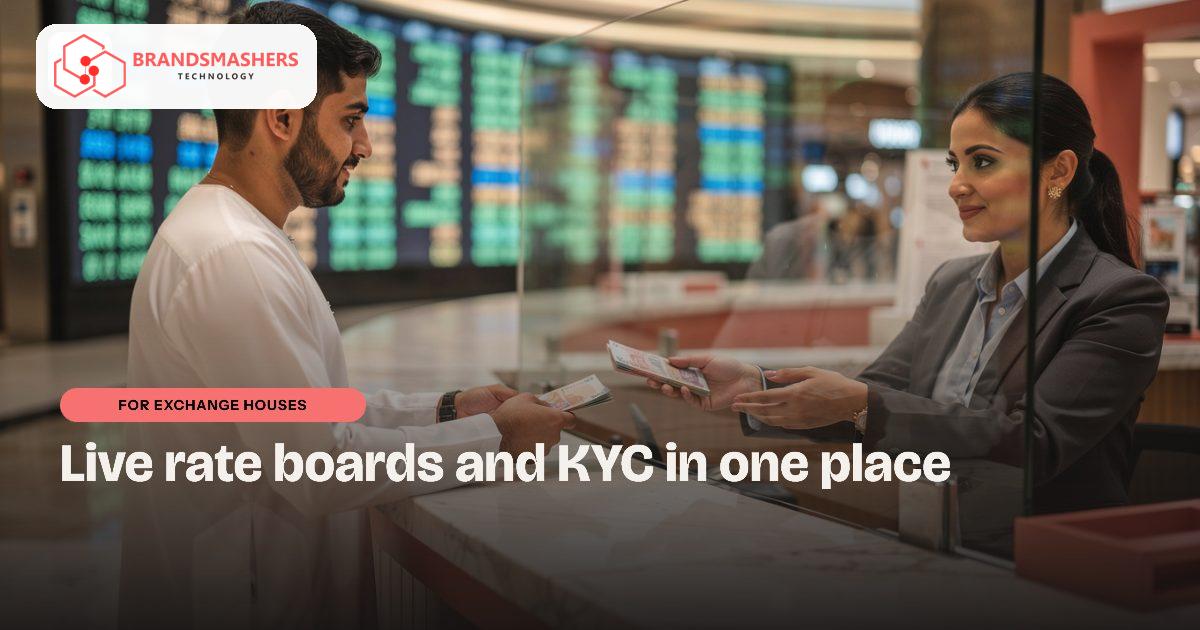
A customer is at the counter in Dubai or Abu Dhabi, the rate on the board changed twenty minutes ago, and one cashier has not heard. Meanwhile, the customer’s ID copy is in a folder and the transaction sits in a separate register. Reconciling it all at closing takes longer than it should.
01.Who this is for
This page suits UAE exchange houses with branches in Dubai, Abu Dhabi or across several emirates that already run a core remittance or currency system. The trouble sits around that core. Rate changes still travel by chat message, so a cashier can quote an old rate. Identity copies live in shared folders instead of on the customer profile. Branch reports are stitched together by hand at closing. Your compliance officer spends time chasing paperwork rather than reviewing it, and head office has no quick way to see what happened at each counter.
02.Why the problem happens
Many exchange operations in the UAE run a core remittance or currency system alongside spreadsheets, chat messages for rate changes and scanned documents. Each piece works alone, but nothing joins them. Rate updates travel by message, KYC files sit in shared folders, and transaction reports are pulled together manually.
With several branches across emirates, head office cannot easily see which rate each counter used, or whether every transaction has a matching customer record.
03.What a better system looks like
A central rate board lets the treasury team publish rates once and push them to every branch screen and counter at the same moment, with a history of each change. Branch managers see the current rate and cannot quote a stale one.
KYC records sit alongside each transaction. Staff capture identity documents once, store them with the customer profile and link them to every deal. Arabic and English screens, plus right-to-left layouts for printed receipts and customer-facing displays, help counter staff and customers alike.
Daily transaction logs summarise each branch and cashier, ready for review by your compliance officer. Fees and VAT treatment depend on the service, so check current rules with your adviser.

04.How an AI add-on helps
Screening assistance can flag unusual patterns or names that merit a second look, so your compliance team reviews them early. It supports people; it does not replace them. Each alert should record who reviewed it and what they decided.
05.What to check before buying any software
- Where is customer data hosted? Ask about hosting in the UAE and check your regulator’s expectations.
- Does it keep an audit trail for rate changes and edits?
- Can it work with your existing core system rather than replace it?
- Can each branch see only what it should?
- Does it support Arabic and English on screen and in print?
Do not accept a system that cannot show you who changed a rate and when.
06.How a first version comes together
For an exchange house, the first version wraps around your existing core system rather than replacing it.
- 01We start by tracing one day of rate changes from treasury to the branch screens and noting where messages and folders take over.
- 02We then agree the smallest useful scope, usually a central rate board with history and KYC records linked to each deal.
- 03Cashiers and the compliance officer test it with real customers and real receipts, in Arabic and English, before anything is switched on widely.
- 04A single branch goes live first so that treasury can confirm every screen updates together and the daily log matches the till.
- 05Screening assistance is added later, once branches use the logs daily and your compliance team is ready to review alerts.
07.Questions buyers ask
- Can exchange house software in the UAE sit beside our core system?
- Yes. Most exchange houses keep their core remittance or currency platform and add a layer for rate publishing, KYC linking and daily logs. The new system reads from or feeds into the core where that is possible, so branches do not have to change everything at once. Ask any vendor to show how a new rate appears on a branch screen while you watch.
- Where will our customer data be hosted?
- Hosting is agreed with you before the build, and you can ask for hosting in the UAE. Check your regulator’s expectations first, then choose a setup that meets them. You should also confirm who can export customer records and that every export is logged. Keep the hosting decision on record, so auditors and your own team can see what was agreed and why.
- Does it support Arabic and English at the counter?
- It should. Screens, printed receipts and customer-facing displays can be built in Arabic and English, with right-to-left layouts where needed. Counter staff can switch language without losing their place, and customers see a receipt they can read. Bilingual receipts also make it easier for a supervisor to check a disputed transaction afterwards.
- How do we get started with Brandsmashers?
- Send us a short note on how rates, KYC and transactions move through your branches today. Brandsmashers works with UAE businesses remotely, so the first conversations happen on calls and shared screens. From there we agree a small first version and price that, rather than quoting for everything up front. You will know what the first stage covers and what it costs before any build begins.
Next step: Tell Brandsmashers how rates, KYC and transactions move through your branches today, and we can discuss a system built around that flow. Reach us at brandsmashers.com/contact.
NEXT STEP
Need help with this?
KEEP READING
More from the blog.
- FOR MUTUAL FUND DISTRIBUTORS AND WEALTH ADVISORS

Reviews and Investment Plan Follow-Ups for Wealth Advisors
READ ARTICLE - FOR TAX CONSULTANTS

Tax Consultancy Practice Software: A Filing Tracker and Client Portal
READ ARTICLE - FOR MUTUAL FUND DISTRIBUTORS AND WEALTH ADVISORS
Client Reviews and SIP Follow-Ups Without the Spreadsheet
READ ARTICLE