Field Collections That Reach the Office the Same Day
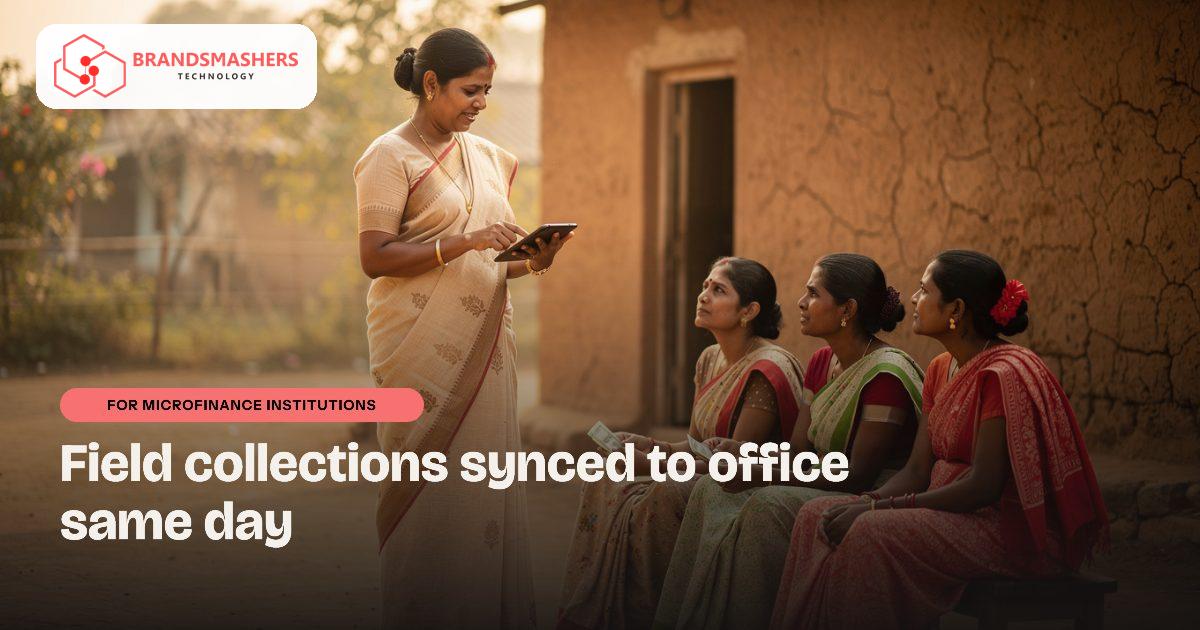
Your field officers walk from village to village, collect small weekly amounts and note them in a register. The office learns what happened days later. By then a missed repayment has become a larger problem and nobody can say which group slipped first.
01.Who this is for
This is for a microfinance institution that runs group lending through field officers visiting centres and villages. You have probably outgrown registers if officers spend their evenings re-entering collections at the branch, cash counts end in arguments, and the branch manager learns about a missed repayment days after the meeting. Weak signal in parts of Madhya Pradesh makes it worse, because tools that need a constant connection get dropped. When nobody can say which group slipped first, the register has stopped doing its job. Officers want a tool that helps at the meeting itself.
02.Why field collections go wrong
Group lending depends on rhythm: the same group, the same day, the same meeting. A paper register cannot show that rhythm across many officers and centres. Errors creep in during re-entry at the branch, and cash reconciliation turns into an evening argument.
Connectivity makes it harder. Many villages in Madhya Pradesh have weak signal, so any tool that needs a constant connection gets abandoned by the field team within a week.
03.What a better system looks like
A good field collection system is built around the officer’s day. It should include:
- A mobile app that works offline and syncs when signal returns
- Group and centre views, so the officer sees who paid and who did not at the meeting itself
- Instant receipts to the member, through print or a WhatsApp message
- End-of-day cash reconciliation by officer and centre
- A branch dashboard showing collection status as the day goes on
- Hindi screens and simple icons for staff who are not comfortable with English
Reports for your accounts team should export cleanly into the software they already use, whether that is Tally or Busy.

04.Where AI helps
An AI add-on can look at repayment patterns, such as repeated late payments or a drop in attendance, and flag groups that look at risk. This gives the branch manager a short list to visit first. It is a prompt for a human conversation, not a verdict on any member. Keep it explainable, so a manager can see why a group was flagged.
05.What to check before buying any software
- Test the app in a low-signal area, not in the vendor’s office.
- Ask how lost phones are handled and whether data stays safe on the device.
- Confirm that you can set up your own group rules, meeting days and product types.
- Check how members’ personal data is stored and who can see it.
- Confirm reporting requirements with your adviser or regulator, as these change.
06.How a first version comes together
A field collection system is best shaped around one officer's real day before it spreads across centres.
- 01Spend a meeting day with a field officer to see how attendance, payments and receipts are recorded at the centre.
- 02Agree a first version covering the offline app, the group view and end-of-day cash reconciliation by officer and centre.
- 03Build it with Hindi screens and simple icons, then test it in a low-signal village rather than in an office.
- 04Roll it out to one branch and its officers first, and fix what they find before adding more centres.
- 05Add the AI add-on that flags at-risk groups once enough repayment history sits in the system for managers to use.
07.Questions buyers ask
- Does a microfinance collection app work without mobile signal?
- It should, and that is the first thing to test. The app lets officers record payments offline at the meeting and syncs when signal returns. Test it in a low-signal area, not in the vendor's office. If the field team cannot trust it on a bad day, they will quietly go back to the register.
- How do members get a receipt?
- Each payment can produce an instant receipt, either printed or sent as a WhatsApp message to the member. This gives members confidence that their money is recorded and reduces disputes at the next meeting. The same entry feeds the branch dashboard, so nobody has to type it twice at the end of the day.
- Can we set our own group rules and meeting days?
- Yes. Group rules, meeting days and product types should be settings you control, not fixed by the vendor. Because the system is custom, it is built around how your centres actually run. Ask for this during any demo, since a tool that forces a generic model creates workarounds in the field.
- What happens if an officer loses a phone?
- Ask any vendor this directly. A sensible design keeps data safe on the device, limits what each officer can see, and lets the office block access to a lost phone. Members' personal data should be stored carefully, with clear rules on who can view it. We would agree these rules with you before launch.
Next step: If your collections are still tracked in registers, talk to Brandsmashers about your workflow at brandsmashers.com/contact. We will start from how your field team actually works.
NEXT STEP
Need help with this?
KEEP READING