
Fair Milk Payments Start With Clean Collection Records
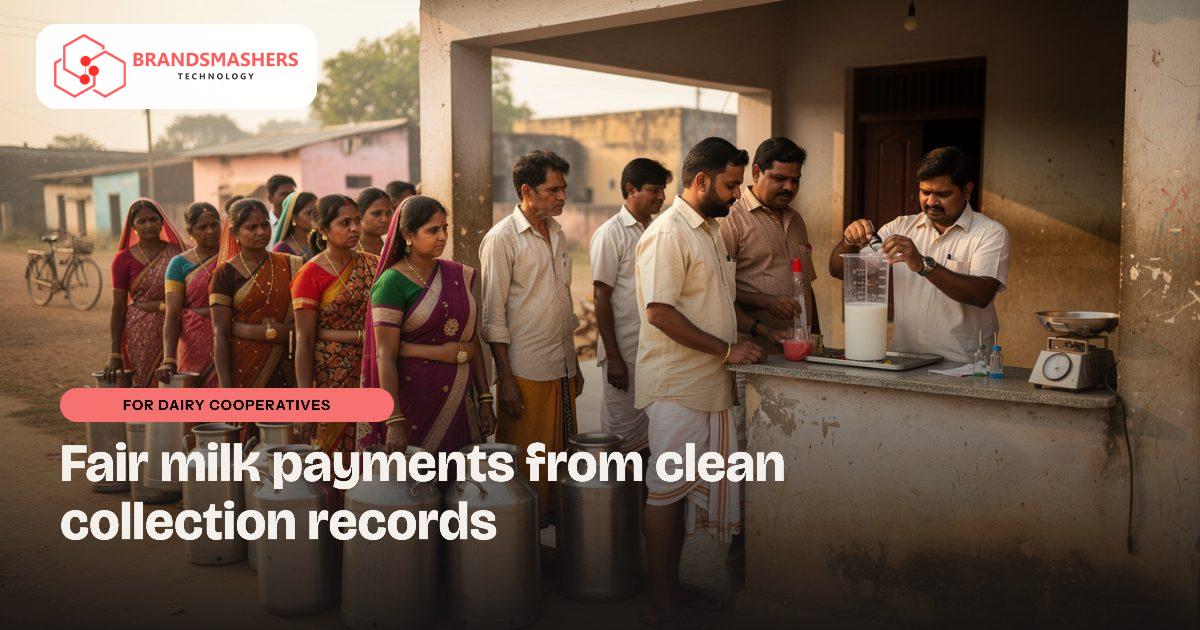
Every morning at a village collection centre, farmers wait to hear their milk quantity and fat reading. Later in the cycle they wait again for payment. If the numbers are written by hand and totalled later, disputes are almost certain, and trust in the society suffers.
01.Who this is for
This is for dairy cooperative societies and their village collection centres, where a secretary records milk quantity, fat and SNF for each farmer at every shift. You have outgrown the register when payment totals regularly need rechecking against rate charts, when farmers question their readings at the counter, or when sour or adulterated milk at the chilling centre cannot be traced back to a shift. Payment cycles that depend on one person's arithmetic put the society's trust under strain.
02.Why collection and payments go wrong
Milk is collected twice a day, measured by quantity and quality, and paid on a cycle. A secretary may record dozens of farmers per shift in a register, then calculate payments from rate charts. Small arithmetic or rate-chart errors repeat across the cycle.
Quality problems also surface late. If sour or adulterated milk is found at the chilling centre, it is hard to trace back to the farmer or the shift, because the records are not linked.
03.What a better system looks like
A good dairy system captures data at the point of collection.
- Farmer register with society, route and bank details.
- Entry of quantity, fat and SNF readings per farmer per shift, ideally taken from the testing equipment where possible.
- Rate calculation using your own rate chart, applied automatically and consistently.
- Payment statements for each cycle, with deductions for feed, advances and loans.
- Chilling centre and route records, so each batch can be traced to the farmers behind it.
Entry should work offline at the village and sync later. Receipts or SMS and WhatsApp updates in Hindi help farmers see the figures straight away.

04.How an AI add-on helps
Quality alerts compare each reading with the usual pattern for that farmer, shift or route and flag unusual results, such as a sudden fat drop or repeated low readings. This lets the secretary check the equipment or the sample before a dispute starts. An alert only points to something worth checking; people decide what happened.
05.What to check before buying any software
- Can it work offline and handle many entries quickly during peak collection?
- Does it use your cooperative’s own rate chart and deduction rules, and allow changes?
- Can it connect to the testing devices you use, or at least accept their readings easily?
- Is it available in Hindi, with farmer-facing receipts that are easy to read?
- Who holds the data, and can you export it for audits and federation reporting?
06.How a first version comes together
A dairy society's first version captures data at the collection counter and builds payments from it.
- 01Watch a morning and evening shift with the secretary to note how quantity, fat and SNF are read, written and later totalled.
- 02Agree a first version with the farmer register, per-shift entries and your own rate chart applied automatically.
- 03Test offline entry at one village centre during peak collection, and check whether readings can come from the testing equipment.
- 04Add cycle payment statements with feed, advance and loan deductions, plus Hindi receipts by SMS or WhatsApp.
- 05Link chilling centre and route records, then add quality alerts so the secretary can check equipment or samples early.
07.Questions buyers ask
- What should dairy cooperative software in India record at the collection centre?
- It should record quantity, fat and SNF for each farmer at each shift, ideally taken from the testing equipment where possible. Your own rate chart is then applied automatically, so payments are calculated the same way every time. Route and chilling centre records link each batch back to the farmers behind it.
- Can it use our society's own rate chart and deductions?
- Yes. The rate chart and deduction rules for feed, advances and loans are set up as your cooperative uses them, and they can be changed when the society revises them. Applying the chart automatically removes the arithmetic slips that repeat across a payment cycle when totals are worked out by hand.
- Will farmers be able to see their figures?
- Yes. Receipts, or SMS and WhatsApp updates in Hindi, let farmers see their quantity, fat reading and amount soon after collection. Seeing the figures straight away reduces disputes at payment time, because questions are raised while the shift is still fresh in everyone's memory.
- How do quality alerts work?
- Each reading is compared with the usual pattern for that farmer, shift or route, and unusual results are flagged, such as a sudden fat drop or repeated low readings. The secretary can then check the equipment or the sample before an argument starts. The alert is a reason to look, and people decide what actually happened.
Next step: If milk collection and farmer payments still rely on registers, talk to Brandsmashers about your workflow and we can look at a system suited to your society and centres: brandsmashers.com/contact
NEXT STEP
Need help with this?
KEEP READING
More from the blog.
- FOR MANDI TRADERS AND COMMISSION AGENTS

A Digital Ledger for Mandi Traders and Commission Agents
READ ARTICLE - FOR AGRI AGGREGATORS
Getting Farmers Onboarded, Picked Up and Paid on Time
READ ARTICLE - FOR MANDI TRADERS AND COMMISSION AGENTS

Clear Buyer and Seller Accounts for Wholesale Produce Traders
READ ARTICLE