Getting Farmers Onboarded, Picked Up and Paid on Time
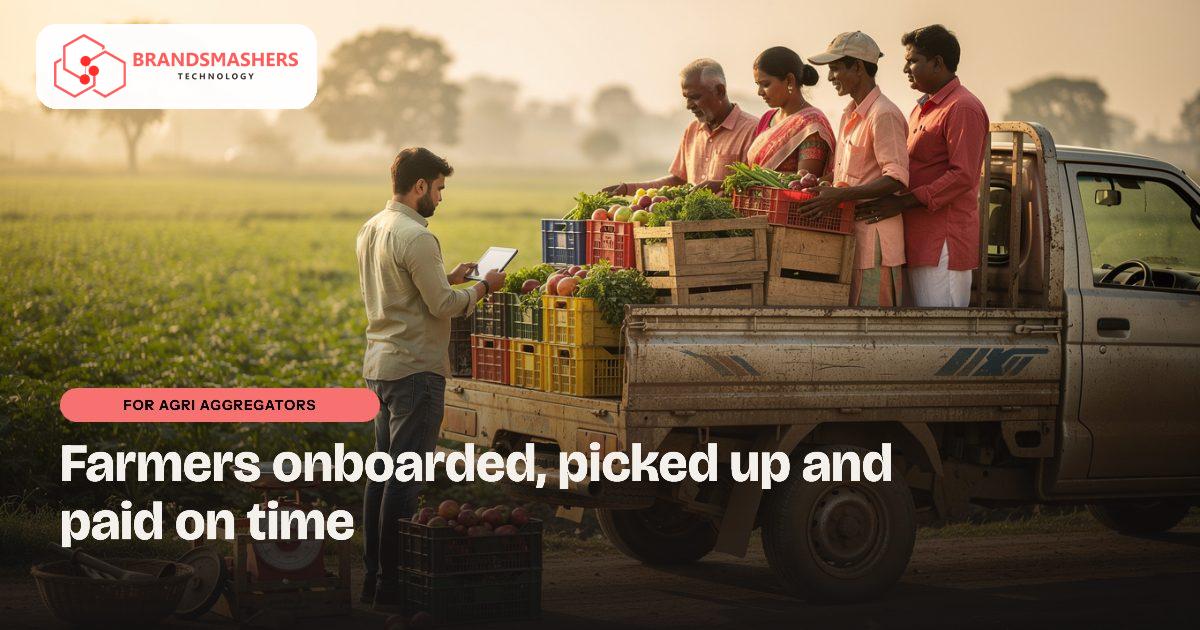
An agri aggregator promises farmers a pickup and a prompt payment, and promises buyers steady supply. Both promises depend on logistics that are usually run from phone calls and WhatsApp. When a truck is late or a payout is delayed, the farmer remembers and tells others in the village.
01.Who this is for
This is for agri aggregators who buy from farmer clusters in Madhya Pradesh and supply buyers, promising farmers a pickup and prompt payment. You have outgrown phone calls and WhatsApp if onboarding records are often incomplete, if vehicles run half full or miss farmers, or if payouts are delayed because weights, grades, deductions and transport charges sit in separate sheets. When a late payout becomes talk in the village, the operation needs one record that follows produce from farm to buyer.
02.Why aggregation operations strain
Onboarding a farmer needs documents, bank details, crop and land information, and sometimes a field visit. Staff collect these on paper or in chats, and records end up incomplete. Later, pickups are arranged village by village, and vehicles may run half full or miss farmers altogether.
Payouts are the last gap. Weights, grades, deductions and transport charges all affect the final amount, and when they are tracked across different sheets, payments get delayed or disputed.
03.What a better system looks like
A good aggregator system follows the produce from farm to buyer.
- Farmer onboarding on a phone, with photos of documents and consent recorded, in Hindi or the local language.
- Crop and expected harvest records, so supply can be planned for Madhya Pradesh clusters.
- Pickup requests grouped by village and date, assigned to vehicles and drivers.
- Weighment and grading at pickup or the centre, linked to the farmer’s account.
- Payout calculation and bank payment lists, with statements sent on WhatsApp.
- Buyer orders and delivery records, so supply matches demand.

04.How an AI add-on helps
Route planning can group pickups and suggest an order of stops based on locations, vehicle capacity and time windows. It helps dispatchers build a first plan quickly, which they can change when a road is blocked or a farmer is not ready. It is only as good as the location data, so clean village and farm addresses matter from day one.
05.What to check before buying any software
- Is farmer data handled carefully, with permission and limited access? Check current data protection rules with your adviser.
- Does it work offline for field staff in areas with weak signal?
- Can it handle your own grading, deduction and payout rules?
- Can it export payment files in the format your bank accepts?
- Can it grow from one cluster to many, without being rebuilt?
06.How a first version comes together
An aggregator's first version follows the produce from the farmer's field to the buyer's order.
- 01Map onboarding, pickup and payout with a field officer, a dispatcher and the accounts person, using one cluster as the example.
- 02Agree a first version with phone-based farmer onboarding in Hindi or the local language, consent recorded, and weighment linked to each farmer's account.
- 03Test offline onboarding and weighment with field staff in an area with weak signal before widening the rollout.
- 04Add pickup requests grouped by village, payout calculation, bank payment lists and WhatsApp statements, then buyer orders and deliveries.
- 05Introduce route planning once village and farm addresses are clean, with dispatchers free to change the suggested order of stops.
07.Questions buyers ask
- What should agri aggregator software in India cover?
- It should cover the whole path from farm to buyer: onboarding with documents and consent, crop and expected harvest records, pickups grouped by village, weighment and grading linked to the farmer's account, payouts and buyer orders. Starting with onboarding and weighment gives the rest of the system clean records to build on.
- How is farmer data protected?
- Farmer data should be collected with permission and seen only by staff who need it, with access set by role. Consent is recorded during onboarding. Check current data protection rules with your adviser, and make sure the agreement states who owns the data and how it can be exported.
- Can it handle our own grading and deduction rules?
- Yes. Grading, deductions and transport charges are set up as you apply them today, and the payout is calculated from the weighment record. Bank payment lists can be exported in the format your bank accepts, and farmers receive statements on WhatsApp showing how their amount was worked out.
- Can we start with one cluster?
- Yes, and it is usually wise. Running one cluster first shows whether field staff can onboard farmers and record weighments offline, and whether payouts reach farmers on time. The system can then grow to many clusters without being rebuilt, which is worth confirming at the start.
Next step: If onboarding, pickups and payouts are still run through calls and sheets, talk to Brandsmashers about your workflow and we can discuss a system built for your supply chain: brandsmashers.com/contact
NEXT STEP
Need help with this?
KEEP READING