
Member Ledgers Without the Monthly Reconciliation Panic
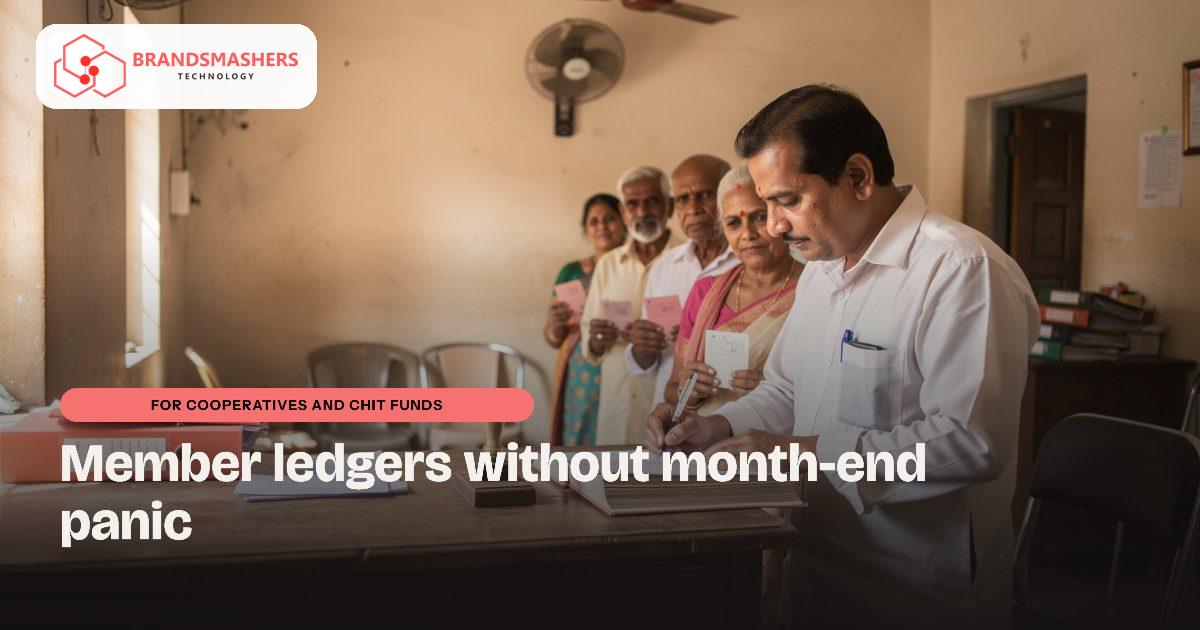
For a cooperative society or chit fund, trust rests on the ledger. Members want to know what they have paid and what is due. When the ledger is a set of registers or a heavy spreadsheet, answering a simple question takes time, and small errors become big arguments.
01.Who this is for
This is for a cooperative society or chit fund that collects from members through agents and counters and still keeps the ledger in registers or a heavy spreadsheet. Most accountants in this sector will know the pattern. Cash, bank transfer and UPI entries are made late or twice. Penalties and instalment rules are applied by hand, scheme by scheme. The accountant loses days to reconciling at month end, and members who paid on time still get reminders. A simple balance question takes too long, and small errors turn into arguments. Committee meetings then start with disputes.
02.Why ledgers go wrong
Collections come in cash, bank transfer and UPI, often through agents. Entries are made late and sometimes twice. Interest, penalties and instalment rules differ by scheme, and they are applied by hand.
At month end, the accountant spends days reconciling, and members who paid on time may still get a reminder. That harms goodwill.
03.What a better system looks like
A ledger system for this sector should be built around your own scheme rules. It should include:
- A member record with schemes joined, instalments paid and balance
- Collection entry for agents and counters, with a receipt for every payment
- Scheme rules set up once, such as instalment dates and penalties as per your by-laws
- A passbook or statement that a member can view or receive on WhatsApp
- Daily and monthly reports for the committee
- A full audit trail showing who changed what and when
Hindi and local language support matters here, since staff and members may not be comfortable in English. Reports should export to Tally or Busy if your accountant uses them.

04.Where AI helps
A reminder bot can send polite messages to members before a due date and a thank-you after payment. It uses the ledger, so members who have paid are not chased. It can also answer simple questions, such as “what is my balance”, by reading the ledger. Staff should approve the wording, and sensitive cases should always go to a person.
05.What to check before buying any software
- Ask how your scheme rules, not a generic loan model, will be set up.
- Check that changes to old entries are logged and cannot be hidden.
- Confirm who can see member data, and how access is limited.
- Check the legal and registration requirements for your type of society or fund with your adviser, since they vary.
- Test with real month-end data.
- Make sure the data can be exported at any time.
06.How a first version comes together
For a society or fund, the first version should model one scheme exactly as your by-laws describe it.
- 01Choose one scheme and walk through its instalment dates, penalties and payout rules with your accountant and committee.
- 02Agree a first version with member records, agent and counter collection entry, and a receipt for every payment.
- 03Build it with Hindi and local language support, and test it against a real month-end of that scheme's data.
- 04Roll it out to one branch or agent group first, then add member passbooks on WhatsApp and committee reports.
- 05Add the reminder bot once the ledger is trusted, so only members who have not paid are reminded before a due date.
07.Questions buyers ask
- What should chit fund management software in India include?
- Member records showing schemes joined, instalments paid and balance, plus collection entry for agents and counters with a receipt for every payment. Scheme rules such as instalment dates and penalties should be set up once, as per your by-laws. Committee reports and a full audit trail of who changed what are essential.
- Can it handle UPI, cash and bank transfers together?
- Yes. Each payment is recorded once, against the member and scheme, whatever the mode. That removes the double and late entries that cause month-end trouble. Reports can then export to Tally or Busy if your accountant uses them, so the ledger and the books tell the same story.
- Can old entries be edited quietly?
- They should not be. Any change to an old entry should be logged with who made it and when, and that log should not be hidden or deleted. This protects members, staff and the committee alike. Ask every vendor how they handle this, and test it yourself during the demo.
- Is the software set up for our legal registration?
- The software follows the rules you give it, but it does not decide your legal position. Requirements vary by type of society or fund, so check legal and registration requirements with your adviser. Once those are clear, your scheme rules and reports can be set up to match them.
Next step: If your ledger still depends on registers and sheets, talk to Brandsmashers about your workflow at brandsmashers.com/contact. We can look at one scheme and show how it could be set up.
NEXT STEP
Need help with this?
KEEP READING
More from the blog.
- FOR PRO AND VISA SERVICES FIRMS

Visa and Document Expiry Tracking for PRO Teams
READ ARTICLE - FOR MUTUAL FUND DISTRIBUTORS AND WEALTH ADVISORS

Client Reviews and SIP Follow-Ups Without the Spreadsheet
READ ARTICLE - FOR PRO AND VISA SERVICES FIRMS

PRO Case Tracking: Visas, Licences and Expiry Dates
READ ARTICLE