
NGO Donor Management Software: Make Impact Reporting Less Painful
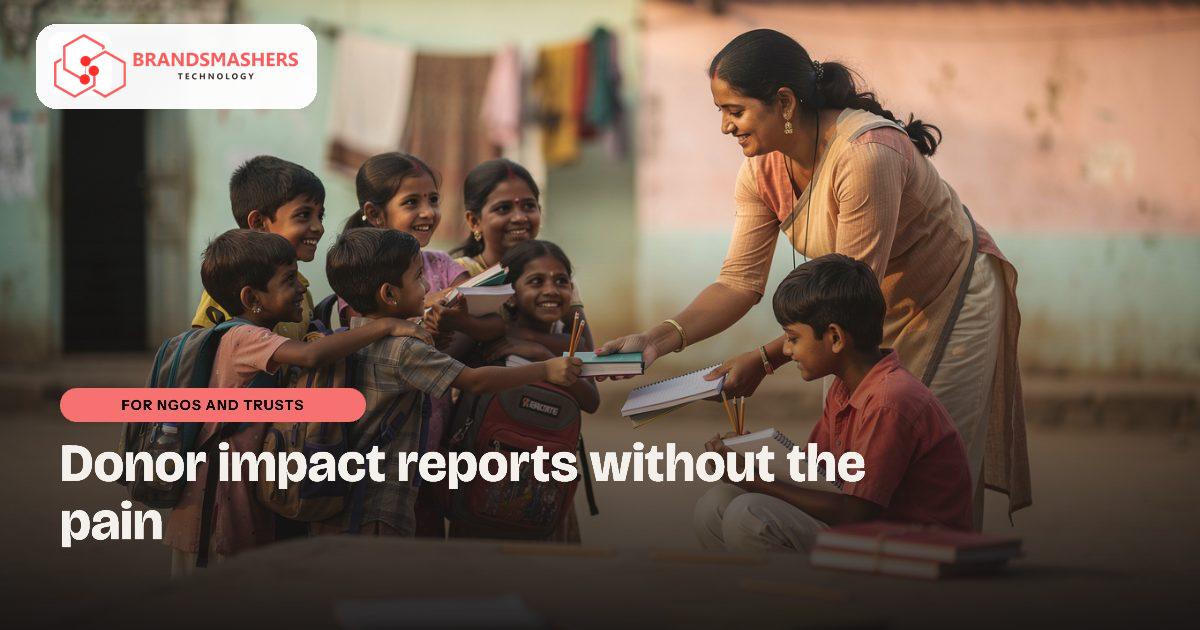
Every NGO team knows the stress when a donor asks for an update and the data is spread across field notes, spreadsheets and email threads. The work is real, but proving it takes weeks that should go to the programme.
01.Who this is for
This is for NGOs and trusts in Madhya Pradesh and beyond running programmes with a few staff and many volunteers. You have outgrown registers and sheets when field activities arrive by WhatsApp and get retyped by programme managers, when finance holds the money view somewhere else, and when each donor report is rebuilt from scratch. If one colleague is the only person who knows where everything is, and reporting season pulls the team off the field, a linked donor and programme system will help.
02.Why it happens
Donors, grants, projects and field activity are usually tracked separately. Field staff record activities in registers or WhatsApp, programme managers copy them into sheets, and finance holds the money side elsewhere. Each donor wants a slightly different report format.
Smaller organisations in Madhya Pradesh often run on a few staff and many volunteers, so the person who knows where everything is becomes a single point of failure.
03.What a better system looks like
A useful NGO system links the money, the work and the people:
- Donor records with giving history, communication and preferences
- Grants and funding linked to specific projects and budgets
- Activity and beneficiary data captured by field staff on a phone, in Hindi or English
- Task tracking so reporting deadlines are visible early
- Report templates that pull from the same data for each donor
- Receipts and donor communication that follow your finance team’s process
Rules for donations, receipts and reporting differ by organisation type, so check current requirements with your adviser or auditor. The system can support your process, but it cannot replace professional advice.
Begin with the report your biggest donor asks for. If the system can produce that one report cleanly from live data, the rest of your donor reports become variations on it, and the team sees the benefit within the first reporting cycle.

04.How an AI add-on helps
Report drafting can turn recorded activities and figures into a first narrative in the donor’s format, such as a summary of activities completed this quarter. A programme officer checks it, adds the stories and context, and corrects anything that does not match the field reality. It saves the blank-page effort, while accuracy stays with your team.
05.What to check before buying any software
- Can field staff use it with weak connectivity?
- Does it protect beneficiary privacy, with limited access by role?
- Can reports be adjusted to each donor’s format?
- Does it fit your existing accounting tool, such as Tally?
- Can you take all your data with you if needs change?
Choose something your least technical team member can use without help.
06.How a first version comes together
For an NGO, a first version starts from the report your biggest donor asks for.
- 01We sit with programme, field and finance staff to trace how an activity becomes a line in a donor report.
- 02We agree a first version built around that one donor report, with donor records, grants and linked projects.
- 03Field staff test phone data capture in Hindi or English, including in areas with weak connectivity.
- 04Task tracking for deadlines, receipts following your finance process and report templates for other donors come next.
- 05AI report drafting is added once activity data is recorded consistently, with a programme officer checking every draft.
07.Questions buyers ask
- What should NGO donor management software in India include?
- It should hold donor records with giving history and preferences, link grants to projects and budgets, and capture field activity on a phone. Report templates should pull from the same data for each donor. That way money, work and people stay connected instead of scattered across sheets. Reporting deadlines also become visible early, so the team is not surprised when a donor asks for an update.
- Can beneficiary information be kept private?
- Yes. Access can be limited by role, so field staff, programme managers and finance each see only what they need. Beneficiary privacy is planned from the start. You should still check your own obligations with your adviser, since the system supports your process but does not replace advice. Role-based access also helps when volunteers join for a short programme and should see only the activities they record.
- Will it work with Tally for our accounts?
- It can fit around Tally so finance does not retype donations. We look at how your finance team works now and agree what passes across. Rules for receipts differ by organisation type, so confirm current requirements with your auditor or adviser. Keeping finance in its familiar tool while programme data lives in the new system usually makes adoption much easier.
- Is it simple enough for volunteers?
- It should be, and that is a test we take seriously. We design screens so your least technical team member can use them without help. Field forms stay short, and we test with real volunteers before rollout so problems surface early. Forms can also work with weak connectivity in the field, so volunteers are not forced to wait for signal before recording.
Next step: If reporting season keeps pulling your team off the field, tell us about your programmes and we can discuss a system built around them. Get in touch at brandsmashers.com/contact.
NEXT STEP
Need help with this?
KEEP READING
More from the blog.
- FOR ISPS AND TELECOM RESELLERS
ISP Billing and Complaint Software: Keep Subscribers and Fix Faults Faster
READ ARTICLE - FOR TEMPLE AND RELIGIOUS TRUSTS

Temple Trust Donation Software: Clear Receipts and Smoother Events
READ ARTICLE - FOR ISPS AND TELECOM RESELLERS
ISP and Telecom Reseller Billing Software UAE: Handle Plans, Invoices and Faults
READ ARTICLE