Plastics Unit Machine Utilisation Software for Indian Factories
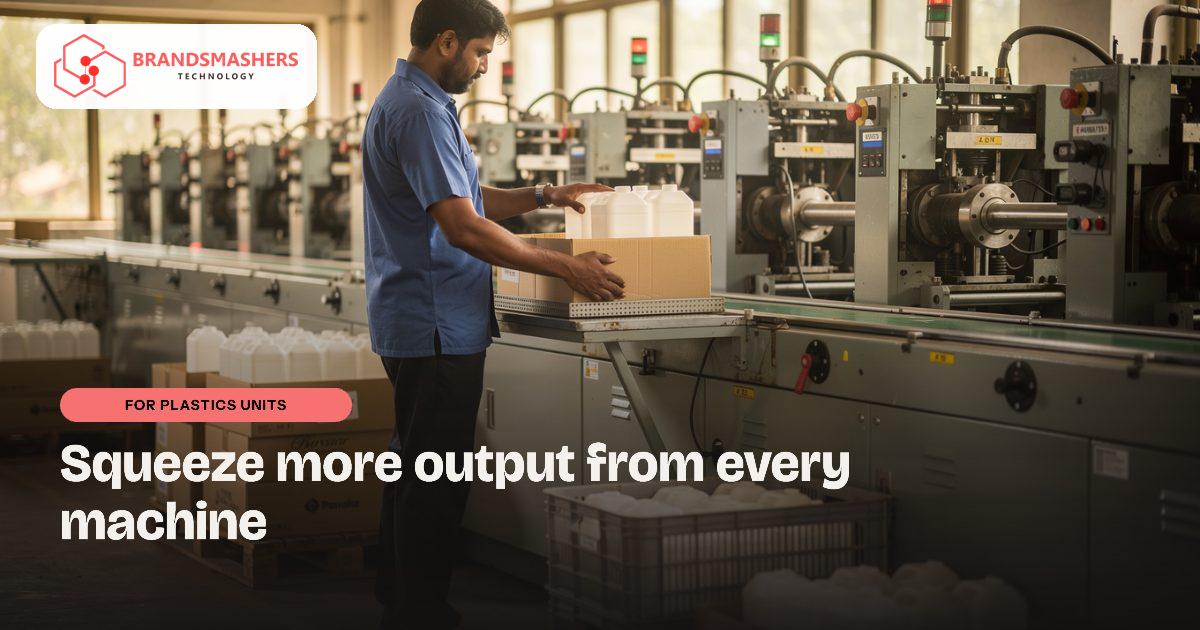
Machine 4 stood idle for part of a shift waiting for a mould change. The supervisor remembers it, the log does not, and the cost never reaches a report. For plastics units in Indore, Vapi, Rajkot or Delhi NCR, this is what happens when you cannot see how long each machine really runs, stops or waits for a mould, so idle time hides in the day. Brandsmashers Tech, based in Bhopal, builds fast, AI-assisted custom software for gaps like this. Here is how we would approach it for a plastics unit.
01.Who this is for
This is for plastics units in India running moulding or extrusion on a mix of machines and shifts, on tight margins and rising power costs. You have outgrown the logbook when nobody can say how long a machine waited for a mould change, when stoppage reasons are remembered by the supervisor but never written down, and when the owner hears about idle time only once the numbers look wrong. Job status chased by phone between moulding and dispatch is another sign that the paper log is not enough.
02.Why idle time is the biggest hidden cost
Most plastics units do not lack effort. They lack one place where the facts live. So people fill the gap with calls, messages and memory, which works until volume grows or a key person is away. Off-the-shelf tools rarely fit because your process has its own steps and exceptions, and forcing it into a template brings the spreadsheets back.
03.What we build for moulding and extrusion
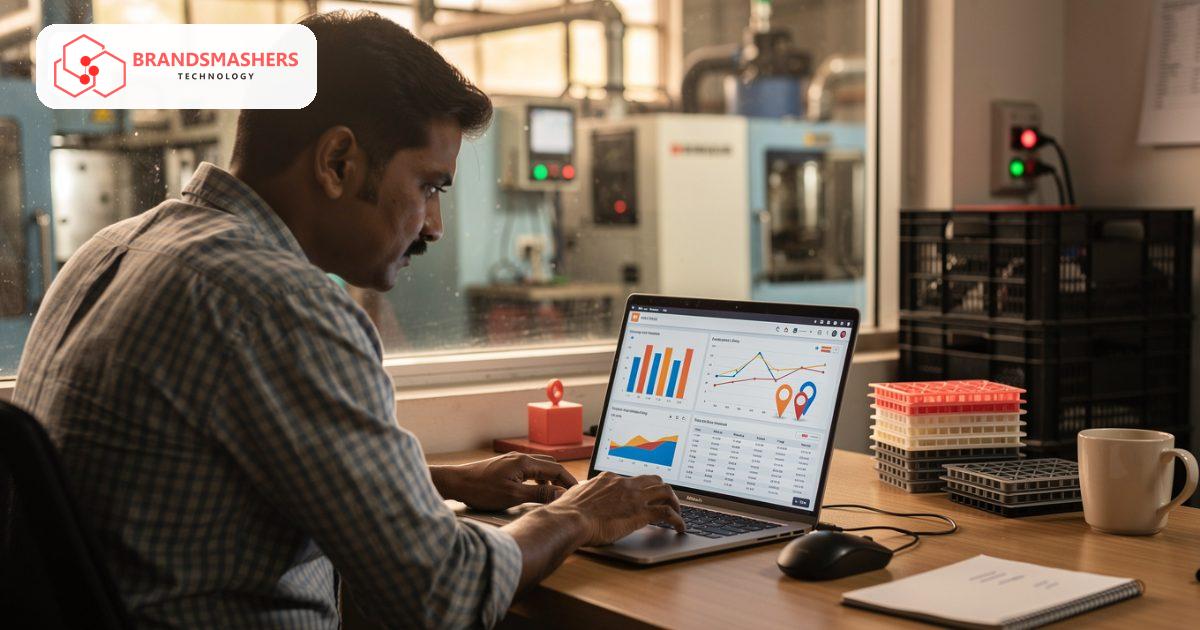
We start with the workflow that hurts most. For this business that usually means a machine log with running, idle and changeover time, job tracking from order to moulding to dispatch, reason codes for every stoppage, captured in two taps, and utilisation views by machine, shift and product. AI-assisted development lets you see a working version early and refine it with your team. Where you already run accounts software, we connect to it rather than replace it.
04.Where AI helps, and where it stops
The AI layer is modest and useful: downtime prediction that learns from your own stoppage history and warns when a machine looks likely to stop. Predictions are only as good as the history, so we start with logging and add prediction once there is enough data to trust. If your data is thin at the start, we begin with clean capture and add intelligence as records grow.
05.Built for India, not adapted to it
Indian plastics units run tight margins and rising power costs, so utilisation matters. Entry works on a basic phone or a shop-floor tablet with Hindi labels, GST invoices follow dispatch, and owners get a WhatsApp summary at shift end. Everything is priced in rupees for units that do not want an enterprise MES.
06.How a first version comes together
For a plastics unit, the first version usually starts with honest machine logging, because everything else depends on it.
- 01We stand on the floor with your shift supervisors to see how running, idle and changeover time are noted, or missed, today.
- 02We agree a first version with a machine log and stoppage reason codes captured in two taps, on a basic phone or shop-floor tablet with Hindi labels.
- 03Operators test it during real shifts, and we refine the reason codes with them until they match the stoppages that actually happen.
- 04Job tracking from order to moulding to dispatch follows, with GST invoices on dispatch and a WhatsApp summary to owners at shift end.
- 05Downtime prediction is added only once your stoppage history is deep enough to trust.
07.Questions buyers ask
- What does machine utilisation software for a plastics unit in India actually measure?
- It measures running, idle and changeover time for each machine, with a reason code for every stoppage. From those entries it builds utilisation views by machine, shift and product. You see where time goes, such as waiting for a mould, and can act on the causes that keep returning.
- Do we need new machine sensors to start?
- No. Entry works on a basic phone or a shop-floor tablet, with stoppage reasons captured in two taps. Starting with manual logging keeps the first version simple for units that do not want an enterprise MES. The data your team records is enough to show where idle time builds up, and it grows more useful every shift.
- When can we use the AI downtime prediction?
- Once there is enough stoppage history to learn from. The prediction learns from your own records and warns when a machine looks likely to stop. Predictions are only as good as the history, so we start with logging and add prediction later. Your supervisors decide what to do with each warning.
- How will the owner keep track without logging in?
- Owners get a WhatsApp summary at shift end showing how each machine ran. That keeps them informed without another app to open. If they want more detail, the utilisation views break time down by machine, shift and product, and GST invoices follow each dispatch, all priced in rupees.
Next step: Tell us the one process that costs plastics units the most time today, and we will sketch what a first version could look like for your team in Indore. Contact Brandsmashers Tech
NEXT STEP
Need help with this?
KEEP READING