5 ways AI is quietly transforming farm management
None of these require replacing the farmer's judgement. They give it better information sooner. Here are five areas where AI is already doing quiet, useful work on farms, with an honest look at what each does and where it falls short.
Farm management has always been about decisions made with incomplete information. When to plant. When to water. When to spray. When to harvest. AI does not change that. It adds a new source of evidence, often earlier than a person could gather it. Most of the value comes in small steps, not in dramatic announcements. Here are five of them.
01.1. Crop monitoring
Imagery analysis spots stress, disease or pests earlier than walking the field.
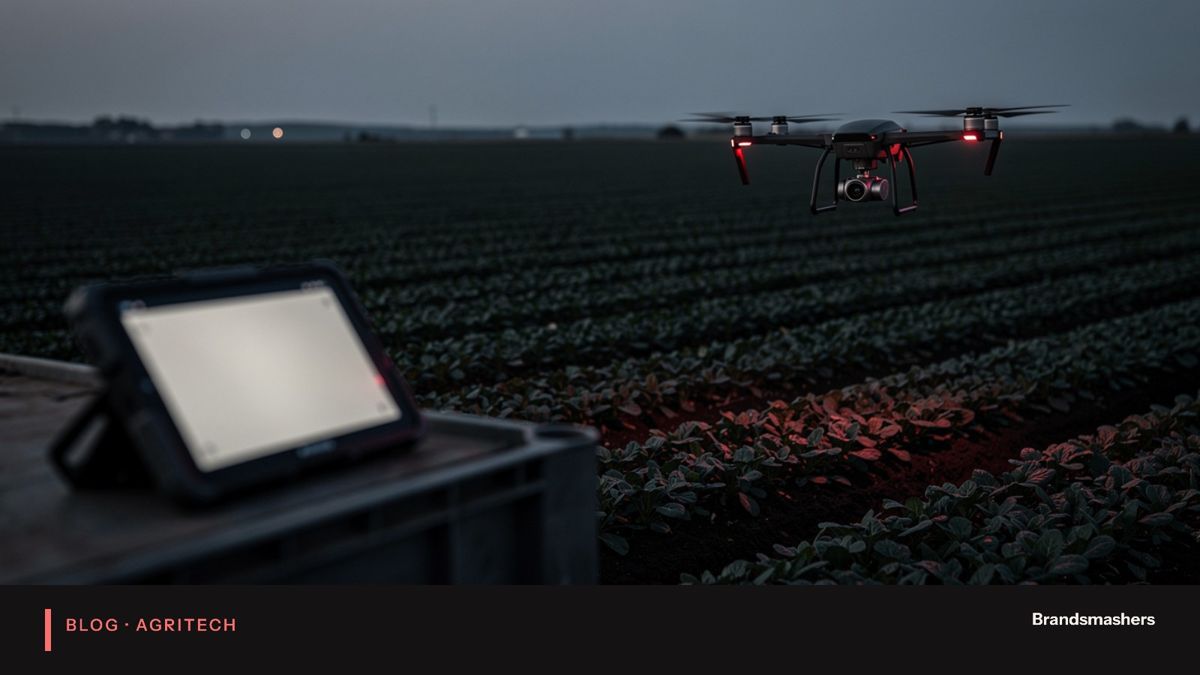
Satellite and drone images capture how plants reflect light. Healthy and stressed plants look different, sometimes before a person would notice. Software turns those differences into simple indicators and highlights zones that look unusual.
In practice, this works best as a way of deciding where to walk. The image says "look here". The agronomist finds out why. It does not tell you the cause by itself, and cloud cover can leave gaps. The best systems show how fresh the image is and let the agronomist record what they found, which improves later alerts.
02.2. Irrigation
Models combine soil moisture and forecasts to water only when needed.
Fixed schedules ignore conditions. A system that reads soil sensors and checks the forecast can hold back before rain and act earlier ahead of heat. The saving is in water, energy and sometimes labour.
What to watch: sensor placement and quality matter a great deal. A badly placed sensor gives confident, wrong answers. Good systems check the readings, fall back to a safe schedule when a sensor fails and always allow the farmer to override.
03.3. Yield forecasting
Better predictions help plan labour, storage and sales.
If you know roughly what is coming, you can book pickers, arrange storage and talk to buyers earlier. Forecasts combine past yields, weather, crop stage and imagery.
What to watch: forecasts are estimates, and a wide spread is normal early in a season. Treat the number as a range and update the plan as it narrows. A forecast that is shown with false precision causes bad decisions.
04.4. Equipment maintenance
Sensor data flags machinery problems before harvest-season breakdowns.
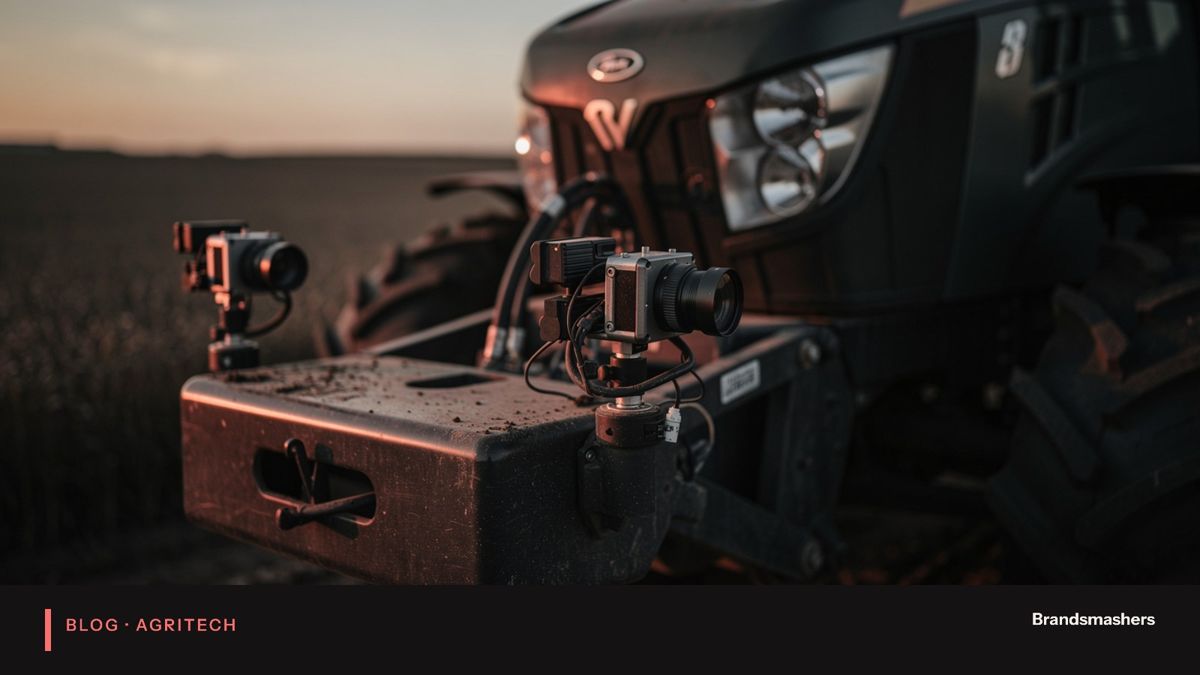
A tractor that fails in the middle of harvest is expensive. Data on engine hours, temperatures and vibration can show wear before it becomes a breakdown. This lets the farm schedule repairs in quiet periods.
What to watch: this needs data from the machine, which is not always easy to get at, and it works best with fleets large enough to learn from. For a single older machine, a good service routine may still be the better answer.
05.5. Input planning
Variable-rate application of seed and fertiliser reduces waste.
Fields are not uniform. Some zones need more, some less. Maps built from soil data and past performance let equipment apply different amounts across a field. The saving is in inputs, and sometimes in better results from the zones that were previously under-served.
What to watch: the maps are only as good as the data behind them, and the equipment must support variable-rate application. It is worth starting with one field to check that the approach pays.
06.How to judge whether a tool is working
For any of these tools, set up a simple comparison before you start.
- Choose two similar fields or blocks. Use the tool on one and normal practice on the other.
- Record what you do in each, including water, inputs, labour and visits.
- Note the outcome at the end of the cycle: yield, quality and cost.
- Ask the people who used it what they would change.
- Decide whether to widen, adjust or stop.
Weather and soil differ between fields, so one trial does not prove much. Repeat across a second season where you can. Be wary of any supplier who shows results from a single field in a single year as proof.
07.A short example: a mixed farm
A mixed farm grows vegetables and cereals on scattered plots. The owner starts with crop monitoring, since imagery needs no hardware. After one season the team has a clearer picture of which plots struggle early. In season two, soil sensors go into the two worst plots and irrigation advice begins. In season three the farm uses yield forecasts to plan labour and book storage.
Each step used data from the previous one, and the team learned the system step by step. This pace is typical of farms that succeed with these tools. They do not buy everything at once. They add one capability at a time and keep what pays.
08.What the five have in common
None of these tools replace the farmer. Each one:
- Takes data the farm already produces or can cheaply collect.
- Turns it into a clear suggestion or a map.
- Leaves the decision to a person who knows the land.
- Gets better as the farm records what happened.
09.Data you need before any of this works
AI needs records. Many farms have less than they think. Before buying any tool, check what you already hold.
- Field boundaries and names in a consistent form, ideally digital maps.
- Planting dates, varieties and inputs applied, by field and date.
- Yields and quality results from past seasons, even if rough.
- Weather, from a nearby station or a simple on-farm gauge.
- Machinery hours and service history.
If these are missing, begin by collecting them. A year of tidy records makes every later tool more useful. A simple field app that logs tasks and inputs does more for most farms than a clever model with nothing to learn from.
10.How to talk to your team about it
People on the farm often worry that these tools are meant to watch or replace them. Say plainly what the tool is for. Show the first results to the people whose work it affects. Invite their corrections, and act on them. Where a recommendation is overridden, ask why instead of treating it as a failure. Their reasons are often something the system does not know yet, such as a drainage problem or a gate that does not close.
11.Common mistakes
- Starting with the most complex use. Begin with one that has a clear payback and simple data, such as monitoring or irrigation.
- Trusting a model without checking against the field. Walk a few zones to see whether the system matches reality.
- Ignoring connectivity. Tools must work with patchy signal.
- Forgetting the people. If staff do not understand why the system suggests something, they will ignore it.
12.What to do next
Pick one decision your team makes often where better information would help. Write down what data you have for it today. Run a small trial on a few fields and compare with your normal practice over a full cycle. Keep notes on what worked and what did not.
If you want a partner to help turn that into a working product, Brandsmashers builds offline-first farm software and data pipelines, and can start with a short scoping call.
NEXT STEP
Need help with this?
KEEP READING