
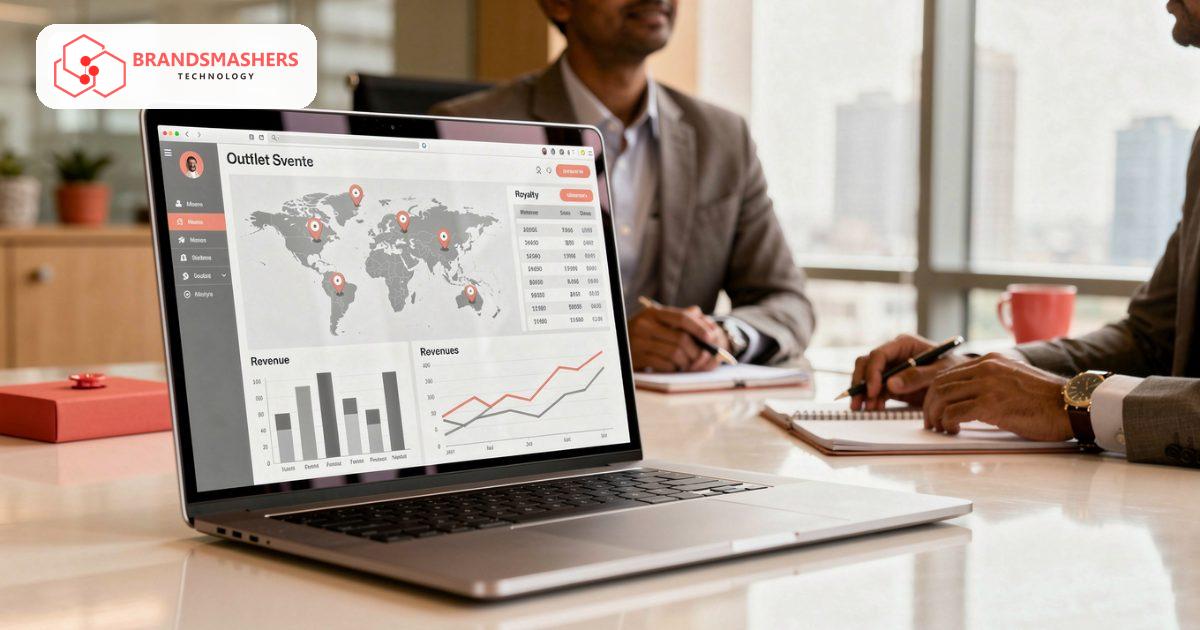
Franchise Reporting Dashboard: One View of Every Outlet and Royalty

If you run a franchise network, you probably spend part of every month asking outlets for numbers. Reports arrive late, in different formats, and royalty calculations depend on figures you cannot easily verify. By the time you spot a problem, it has run for weeks.
01.Who this is for
This is for franchise owners and head offices in Madhya Pradesh and beyond, especially networks growing past their first few outlets. You have outgrown WhatsApp and email reports when each franchisee sends sales in a different format, when royalty calculations rest on figures you cannot verify, and when audits and training are tracked loosely or not at all. If the manual method that worked for a couple of outlets is now a monthly chase, a franchise dashboard with royalty billing will help.
02.Why it happens
Each franchisee runs its own billing tool, spreadsheet or register. Head office asks for sales by WhatsApp or email and rebuilds the figures by hand. Standards, audits and training are tracked separately, if at all.
Growing networks across Madhya Pradesh and beyond feel this most when the third or fourth outlet opens, because the manual method that worked for two outlets stops scaling.
03.What a better system looks like
A franchise system gives head office a single view and gives outlets a simple routine:
- Daily or weekly sales submission, ideally pulled from outlet billing
- Royalty and fee calculations based on the rules in your agreements
- Invoices with GST and a record of what each outlet owes and has paid
- Outlet scorecards covering sales, stock, customer feedback and audits
- Task and checklist assignment, such as launch offers or compliance checks
- Role-based access so each franchisee sees only their own outlet
Agreement terms differ, so the logic should be set up with your own contract in front of you, and your adviser should review how fees are calculated.
Keep the rules visible. If every franchisee can see how their royalty was calculated, disputes drop, and head office spends less time explaining and more time helping outlets improve their numbers.
04.How an AI add-on helps
Anomaly alerts watch the numbers for oddities, such as an outlet whose sales suddenly drop, a sharp rise in discounts or a gap in reporting days. The alert asks a person to look; it does not accuse anyone. Often the cause is innocent, like a closure or a local event, but you find out in days, not at month end.
05.What to check before buying any software
- Can it connect with the billing tools your outlets already use?
- Can royalty rules handle slabs, exceptions and different outlet agreements?
- Is each franchisee’s data separated and protected?
- Can you export complete records for audits or disputes?
- Will outlet staff use it, given their limited time?
Pilot with two or three outlets before rolling out to everyone.
06.How a first version comes together
For a franchise network, a first version gives head office one view and outlets one routine.
- 01We map how outlets report sales today and how head office turns them into royalty and fee invoices.
- 02We set up royalty logic with your agreements in front of us, and your adviser reviews how fees are calculated.
- 03A pilot group of outlets tests daily or weekly sales submission and sees exactly how their royalty was calculated.
- 04GST invoices, payment records, outlet scorecards and task checklists are added once the pilot runs smoothly.
- 05Anomaly alerts are switched on after reporting is regular, prompting a person to ask questions rather than assume.
07.Questions buyers ask
- What should franchise management software in India include?
- It should collect outlet sales, ideally straight from outlet billing, and calculate royalties and fees from your agreements. It should raise GST invoices, track what each outlet owes and has paid, and hold scorecards and checklists. Each franchisee sees only their own outlet. Role-based access keeps each franchisee's figures private while head office sees the whole network on one screen.
- Can royalty rules handle different agreements and slabs?
- Yes, the logic can handle slabs, exceptions and different outlet agreements. It is set up with your contracts in front of us, and your adviser should review it. Showing franchisees how their royalty was calculated also reduces disputes. Keeping the rules visible means head office spends less time explaining figures and more time helping outlets improve.
- Will busy outlet staff actually use it?
- That is a key design goal. Outlet routines are kept short, and sales are pulled from existing billing tools where possible. We pilot with a small group of outlets first and simplify anything that slows staff down before rolling out. Outlets that see the benefit quickly, such as faster royalty statements, tend to keep submitting their figures on time.
- Do anomaly alerts accuse an outlet of wrongdoing?
- No. An alert simply asks a person to look at something unusual, such as a sudden drop in sales or a gap in reporting days. Often the cause is innocent, like a closure. You find out sooner and ask the right question. Knowing within days rather than at month end gives head office time to help an outlet before a small issue grows.
Next step: If chasing outlet reports is a monthly ritual, talk to Brandsmashers about your network and what a franchise dashboard could look like. Begin at brandsmashers.com/contact.
NEXT STEP
Need help with this?
KEEP READING
More from the blog.
- FOR WASTE AND RECYCLING OPERATORS
Waste and Recycling Software: Track Pickups, Weights and Payments
READ ARTICLE - FOR WASTE AND RECYCLING OPERATORS
Waste Collection and Recycling Software UAE: Weights, Routes and Invoices in Sync
READ ARTICLE - FOR CINEMAS AND ENTERTAINMENT VENUES

Cinema Ticketing and POS Software: Sell Seats and Snacks in One Flow
READ ARTICLE