Fewer Empty Shelves and Fewer Wasted Sweets Across Your Outlets
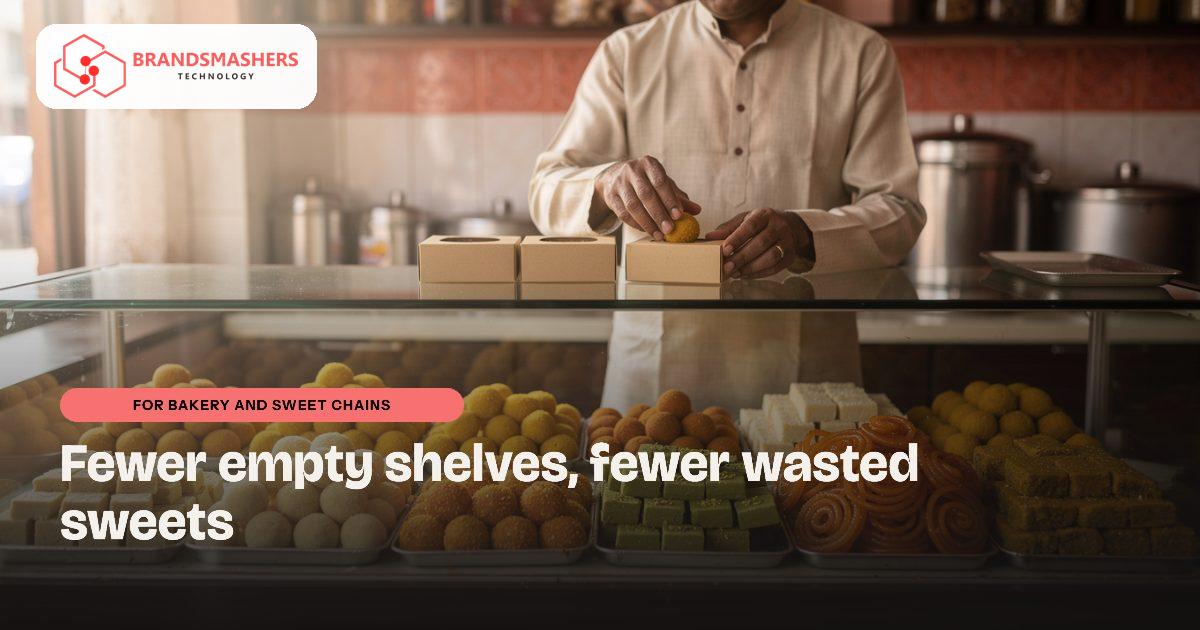
At festival time, one outlet sells out of kaju katli by noon while another throws away unsold trays at night. Outlet managers send indents by phone, the factory guesses, and the stock sheet is updated when someone has time. For a chain, this guesswork shows up directly in waste and lost sales.
01.Who this is for
This is for sweet and bakery chains that grew from one shop into several outlets with a central kitchen, but still take indents by phone and WhatsApp. You have outgrown the old method if each outlet manager sends orders in a different format, if the production team rewrites them into one list every evening, or if one outlet runs out of kaju katli while another throws trays away. A stock sheet that is updated only when someone has time is another sign.
02.Why orders and stock drift
Many sweet and bakery chains in Madhya Pradesh grew from one shop to several outlets without changing how they order. Indents arrive as WhatsApp messages or calls, in different formats from each manager. The production team rewrites them into one list, and mistakes creep in.
Short shelf life makes everything harder. Fresh items cannot wait, so stock has to be tracked by batch and by day, and not just by total quantity. A spreadsheet rarely keeps up with that.
03.What a better system looks like
A good chain system connects the outlet, the kitchen and the stores.
- Outlet indents entered in a simple screen, with a cut-off time and approvals.
- A production plan that adds up all indents and shows what to make, and what raw material it needs.
- Dispatch records and outlet receipts, so differences between sent and received are visible.
- Stock by outlet and by batch, with wastage and returns recorded daily.
- Reports that compare outlets, items and days, including festival periods.
It should sit alongside your billing or POS and your accounts in Tally, Busy or Zoho Books, and not force you to re-enter sales.
04.How an AI add-on helps
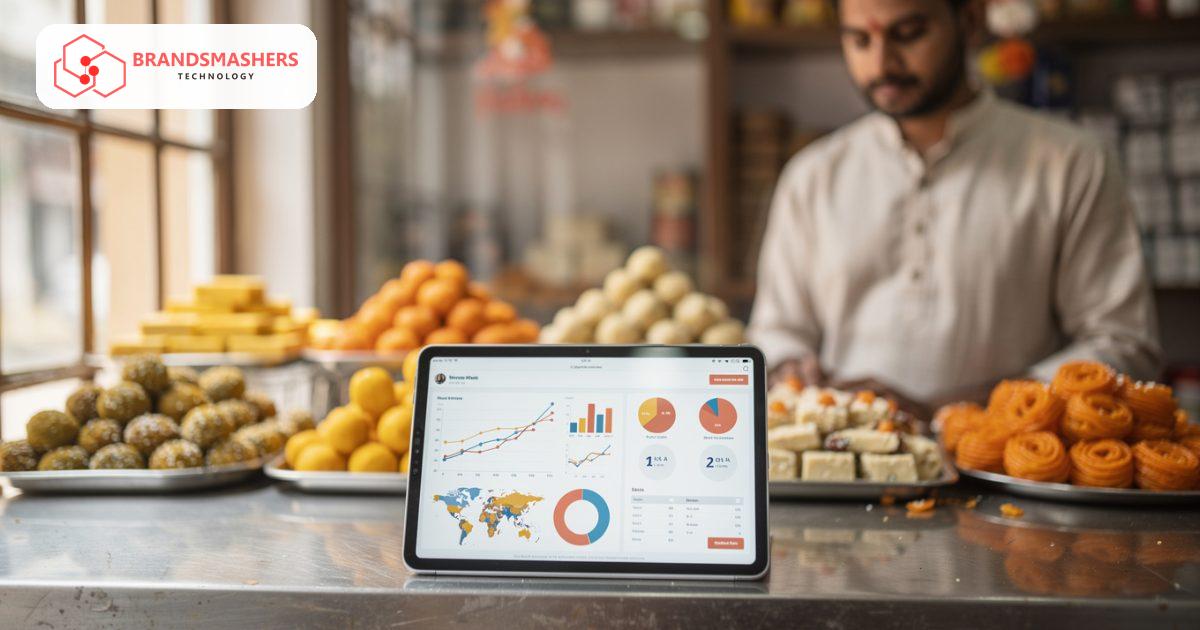
A demand forecast looks at your past sales by outlet, weekday and festival, and suggests how much of each item to make. It is a starting point for the production head, not an order. The more clean daily data you record, including what was left unsold, the more useful the suggestion becomes. With little history, it should say so instead of giving false confidence.
05.What to check before buying any software
- Does it handle items with a short life and batch-wise wastage?
- Can outlet staff use it on a phone, in Hindi if needed, during a busy shift?
- Does it work with your current billing counter and accounting software?
- Can it manage GST rates for different products correctly, as set by your accountant?
- Can you add outlets or products later without paying for a rebuild?
06.How a first version comes together
For a sweet chain, the first version connects outlet indents to the kitchen before it tackles anything else.
- 01Map a normal day and a festival day with an outlet manager, the production head and the stores person, from indent to dispatch.
- 02Agree a first version with an indent screen for outlets, a cut-off time and approvals, and a production plan that totals every indent.
- 03Pilot it with a few outlets so managers enter indents on their phones, in Hindi if they prefer, during real shifts.
- 04Add dispatch and receipt records, batch-wise stock and daily wastage once indents arrive through the system rather than by chat.
- 05Bring in the demand forecast after enough clean daily sales and unsold figures exist, with the production head deciding final quantities.
07.Questions buyers ask
- What should bakery chain inventory software in India track?
- It should track stock by outlet and by batch, not just total quantity, because fresh items have a short life. Outlet indents, the production plan, dispatch against receipt, and daily wastage and returns all belong in it. Reports comparing outlets, items and festival periods then come from the same records without extra work.
- Will it replace our billing counter or Tally?
- No. It should sit alongside your billing or POS and your accounts in Tally, Busy or Zoho Books, so sales are not entered twice. Its job is the part those tools do not cover: indents, production planning, dispatch and batch-wise stock. GST rates for different products are set as your accountant advises.
- Can we start with one outlet and the kitchen?
- Yes, and that is often the sensible route. Starting with the central kitchen and one or a few outlets lets managers get used to indents and cut-off times before the rest of the chain joins. New outlets and products can be added later without a rebuild, which is worth confirming before you begin.
- How accurate is the AI demand forecast?
- It is only as good as your history. The forecast looks at past sales by outlet, weekday and festival and suggests how much of each item to make, as a starting point for the production head. If you have little clean data, including unsold stock, it should say so plainly rather than sound more certain than it is.
Next step: If outlet indents still arrive as chat messages, talk to Brandsmashers about your workflow and we can discuss a system shaped around your outlets and kitchen: brandsmashers.com/contact
NEXT STEP
Need help with this?
KEEP READING